


Thyroid Problems: Medically reviewed by Robert T. Ferraro, MD, CDE — Endocrinologist, Artesia General Hospital
Thyroid problems affect an estimated 20 million Americans — and up to 60 percent don’t know they have one. The thyroid is a small, butterfly-shaped gland in the front of your neck, but when it stops working properly, the effects show up everywhere: your weight, your energy, your mood, your heart rate, and more. For patients in Artesia, Carlsbad, and across southeast New Mexico, expert thyroid care is available close to home — no drive to Albuquerque required.
Concerned about your thyroid? Artesia General Hospital endocrinologist Dr. Robert Ferraro offers thyroid testing and treatment at clinics in Artesia and Carlsbad. Call (575) 736-8440 or Request an Appointment →
What are Symptoms of Thyroid Problems?
When the thyroid stops working properly, the effects are anything but small. Thyroid problems affect millions of Americans and are among the most commonly missed diagnoses, because the symptoms tend to creep up slowly and mimic everyday issues like stress, aging, or exhaustion.
As AGH endocrinologist Robert T. Ferraro, MD, CDE explains: “Thyroid disease symptoms are very common and non-specific. The only way to know if your thyroid levels are normal is to get a blood test. The Endocrine Society recommends the TSH test as the primary screening test for thyroid disease.”
If you’ve been feeling off but can’t quite put your finger on why, your thyroid may be worth checking.
What Does the Thyroid Actually Do?
Your thyroid produces hormones that regulate the pace of nearly every system in your body — metabolism, heart rate, body temperature, and more. When it produces too few hormones, everything slows down. When it produces too many, everything speeds up. Either way, the imbalance creates a wide range of symptoms that are easy to dismiss or misattribute.
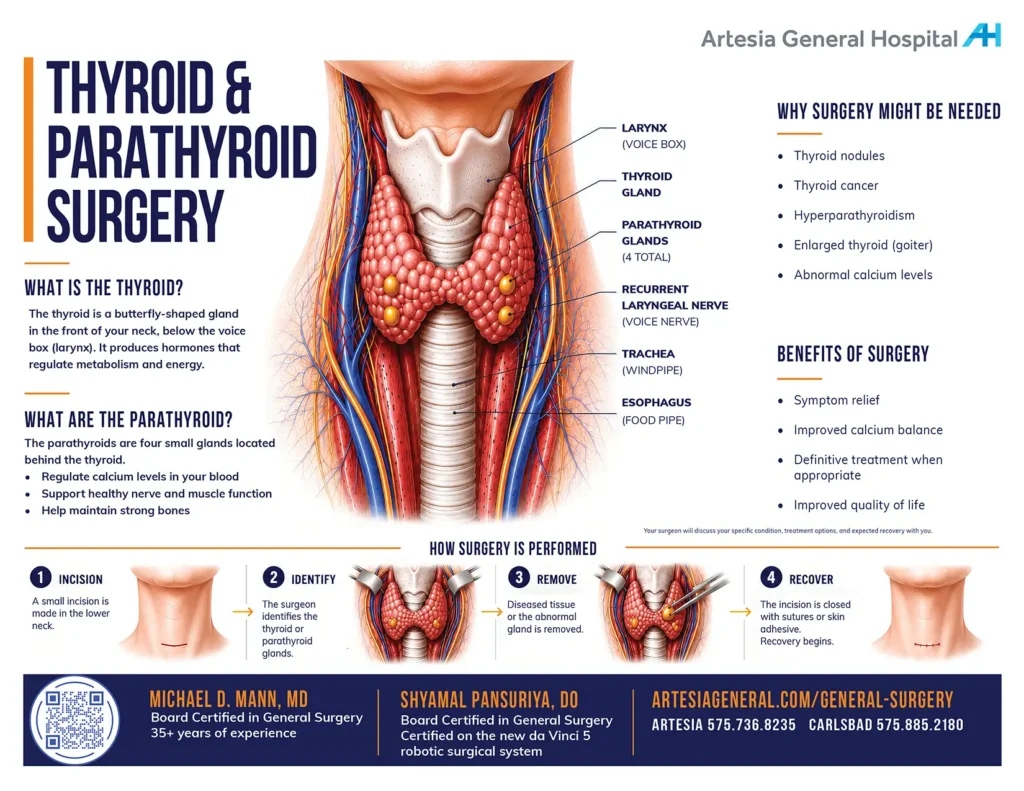
A lump or swelling at the base of the neck deserves prompt evaluation. Most thyroid conditions are managed without surgery, but when a nodule, goiter, or parathyroid problem does need an operation, you don’t have to leave southeastern New Mexico for it. AGH offers thyroid and parathyroid surgery in Artesia, performed by general surgeons Shyamal Pansuriya, DO and Michael D. Mann, MD.
What Is Hypothyroidism? Signs of an Underactive Thyroid
Hypothyroidism — when the thyroid doesn’t produce enough hormones — is the most common thyroid problem. It affects more women than men and most often develops between ages 35 and 60. It tends to run in families.
Early symptoms include:
– Persistent fatigue, even after a full night’s sleep
– Unexplained weight gain
– Feeling cold all the time
– Forgetfulness or mental fogginess
Because these symptoms develop gradually, about half of people who experience them chalk it up to getting older, going through menopause, or just being stressed. That delay in diagnosis can allow the condition to progress.
10 Warning Signs Your Thyroid May Be Off
Thyroid symptoms are easy to dismiss because they develop gradually and overlap with dozens of other conditions. Here are the 10 most common warning signs — covering both an underactive thyroid (hypothyroidism) and an overactive thyroid (hyperthyroidism):
1. Unexplained fatigue that sleep doesn’t fix Persistent tiredness that doesn’t improve after a full night’s rest is one of the most common signs of hypothyroidism. Your body’s energy regulation depends on thyroid hormones — when they’re too low, everything slows down.
2. Unexplained weight changes Gaining weight despite no change in diet or activity may signal an underactive thyroid. Losing weight without trying — despite eating normally or more — may signal an overactive thyroid.
3. Feeling unusually cold or unusually hot Hypothyroidism slows your metabolism and makes you sensitive to cold. Hyperthyroidism does the opposite — you may sweat more and feel overheated even when others are comfortable.
4. Brain fog, memory problems, or difficulty concentrating Thyroid hormones directly affect cognitive function. An underactive thyroid can make you feel mentally slow, forgetful, or like you’re thinking through a fog.
5. Mood changes — depression, anxiety, or irritability Hypothyroidism is commonly associated with depression and low mood. Hyperthyroidism often causes anxiety, nervousness, or irritability. Both can be mistaken for a mental health condition when the thyroid is the actual cause.
6. Hair loss or changes in hair and skin Thinning hair, dry skin, and brittle nails are classic signs of hypothyroidism. Hyperthyroidism can also cause hair loss and produce warm, moist, fine-textured skin.
7. Heart rate changes A slower-than-normal heart rate can indicate hypothyroidism. A rapid or irregular heartbeat — including palpitations — often points to hyperthyroidism. Either way, unexplained heart rate changes warrant evaluation.
8. Changes in bowel habits Constipation is a common but frequently overlooked sign of hypothyroidism. Frequent bowel movements or diarrhea may indicate hyperthyroidism.
9. Muscle weakness, aches, or joint pain An underactive thyroid can cause muscle stiffness, weakness, and general achiness that’s easy to attribute to aging or overexertion.
10. A lump or swelling in the neck A visible or palpable swelling at the base of the neck — called a goiter — can be a sign of thyroid disease, a thyroid nodule, or in rare cases, thyroid cancer. This symptom always warrants prompt medical evaluation.
What to do if you recognize these signs: A simple TSH blood test is the first step. If your levels are abnormal, Dr. Robert T. Ferraro — Artesia General Hospital’s board-certified endocrinologist — provides comprehensive thyroid evaluation and treatment at clinics in Artesia and Carlsbad. Call 575-736-8440 to schedule.
As hypothyroidism advances, additional symptoms may include:
– Depression
– Difficulty concentrating
– Droopy eyelids
– Dry skin and hair
– High cholesterol
– Puffiness in the face
Diagnosis and treatment: Hypothyroidism is confirmed with a blood test. Treatment is straightforward — a daily hormone pill — but finding the right dose matters. Too little won’t relieve symptoms; too much can increase risk of bone loss and heart disease. Because the body’s hormone needs can shift over time, Dr. Ferraro monitors levels through regular follow-up blood tests to keep your dosage dialed in.
What Is Hyperthyroidism? Signs of an Overactive Thyroid
Hyperthyroidism is less common than hypothyroidism but equally disruptive. It also affects more women than men, typically between ages 30 and 50. The most common form is Graves’ disease.
Symptoms of hyperthyroidism include:
– Unexplained weight loss
– Rapid or irregular heartbeat
– Nervousness, anxiety, or irritability
– Shaky hands
– Diarrhea
– In some cases, eye irritation or bulging eyes
Left untreated, hyperthyroidism can lead to serious complications including bone loss, heart problems, and muscle weakness.
Diagnosis and treatment: Like hypothyroidism, diagnosis begins with a blood test. The most common treatment is radioactive iodine therapy — a pill that gradually shrinks the thyroid and reduces hormone output. Depending on the situation, Dr. Ferraro may also recommend medications that block hormone production, or in some cases, surgical removal of part of the thyroid. Even after treatment, ongoing monitoring is essential to ensure hormone levels stay in range.
When Should You Get Tested for Thyroid Problems?
If you’re experiencing any of the symptoms above — even if they seem mild or explainable — a TSH blood test is a simple, definitive way to find out if your thyroid is the cause. Early detection makes treatment significantly easier.
Consider getting tested if you:
– Have a family history of thyroid disease
– Are a woman between the ages of 30 and 60
– Have been diagnosed with another autoimmune condition
– Experience unexplained fatigue, weight changes, or mood shifts that don’t resolve
Thyroid Testing & Treatment at AGH
You don’t need to travel far for expert thyroid care. Robert T. Ferraro, MD, CDE is a board-certified endocrinologist offering comprehensive thyroid evaluation and treatment at Artesia General Hospital, with clinic locations in both Artesia and Carlsbad.
Whether you need a first-time screening, help managing a thyroid condition, or a second opinion, Dr. Ferraro’s team provides convenient, personalized care close to home.
If you’re noticing any of these signs, the first step is an evaluation. Our endocrinology team diagnoses and manages thyroid and parathyroid conditions, and when surgery is recommended, Dr. Pansuriya and Dr. Mann perform thyroid and parathyroid procedures at Artesia General Hospital. Call [AGH scheduling line] to schedule an appointment.
To schedule an appointment:
📞 Call (575) 736-8440
📍 Clinics in Artesia and Carlsbad, NM
Frequently Asked Questions About Thyroid Problems
What are the first signs of thyroid problems?
Early signs vary depending on whether the thyroid is underactive or overactive. Fatigue, unexpected weight changes, and feeling unusually cold or warm are common early indicators of hypothyroidism and hyperthyroidism respectively.
How are thyroid problems diagnosed?
A simple blood test measuring TSH (thyroid-stimulating hormone) levels is the primary screening method recommended by the Endocrine Society. If results are abnormal, additional tests may follow.
Can thyroid problems be cured?
Most thyroid conditions are highly manageable with treatment. Doctors typically control hypothyroidism with a daily hormone pill taken long-term. Providers can often resolve hyperthyroidism with radioactive iodine therapy, medication, or surgery.
Is thyroid disease hereditary?
Yes — thyroid disease, particularly hypothyroidism, tends to run in families. If a parent or sibling has received a diagnosis, you may face a higher risk and should discuss screening with your doctor.
Does AGH treat thyroid conditions?
Yes. AGH endocrinologist Dr. Robert Ferraro specializes in thyroid disorders and sees patients at clinic locations in Artesia and Carlsbad. Call (575) 736-8440 to schedule.
Where can I find an endocrinologist near me?
Specialized endocrine and thyroid care is available at Artesia General Hospital. Robert T. Ferraro, MD, CDE, provides expert consultation and treatment at two convenient regional locations:
- Artesia: 608 N. 13th St., Suite 600 | 575.736.8440
- Carlsbad: 1410 N. 8th St., Suite B | 575.736.8490
Medically reviewed by Robert T. Ferraro, MD, CDE, Endocrinologist at Artesia General Hospital. Last updated 2026.
This content is for informational purposes only and is not intended as medical advice, diagnosis, or treatment. Always consult a qualified healthcare provider with any questions you may have regarding a medical condition. Do not disregard professional medical advice or delay seeking it based on information you have read on this site.