


Screwworm in humans is rare, but it is back in the regional conversation, and southeast New Mexico has real reason to pay attention. The New World screwworm is a flesh-eating fly larva. For years it stayed south, but it has now moved north through Central America and Mexico. The first cases have reached our part of the country. For most people the risk stays low. Still, in ranching country like ours, knowing the signs is simply smart.
This guide explains what the screwworm is, who faces the most risk, and exactly when to seek care. We also point you to the official trackers so you always have the current status. As always, we focus on the human side here, and we tell you where to turn for animal concerns.
What is the New World screwworm?
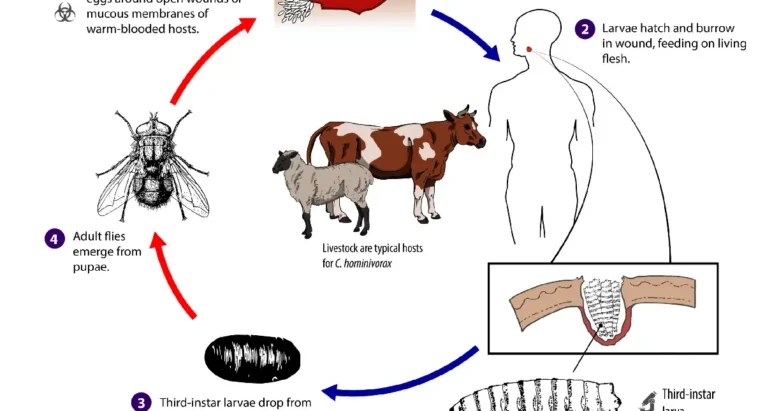
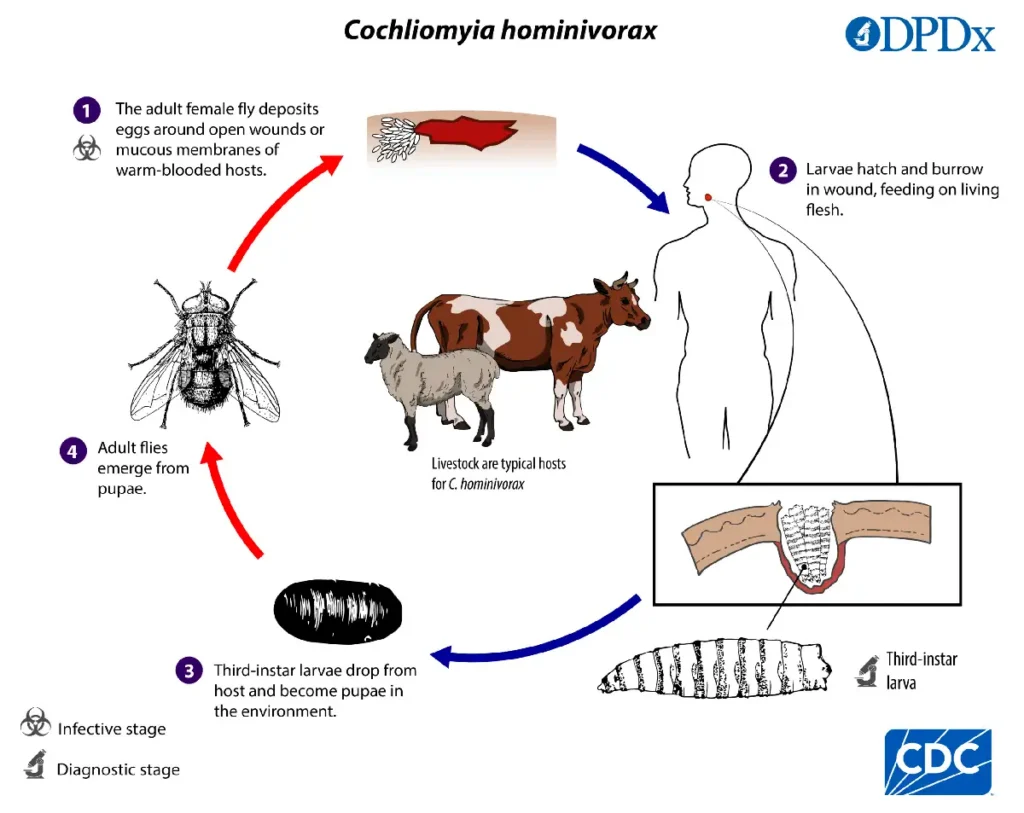
The New World screwworm is the larva, or maggot, of a parasitic fly. Unlike common maggots, these larvae feed on living tissue rather than dead tissue, which is what makes them so damaging. The female fly lays eggs at the edge of an open wound, and within about a day the larvae hatch and burrow inward. The flies can also lay eggs in the ears, nose, eyes, or mouth, so the risk is not limited to cuts on the skin.
Because the larvae anchor themselves with rings of spines as they feed, the wound grows quickly and turns painful. The medical name for this kind of infestation is myiasis. For the full background, the CDC offers a clear overview of the screwworm for anyone who wants it.
Can humans get screwworm?
Yes, humans can get screwworm, but human cases are uncommon and the United States risk remains low. The screwworm mainly affects livestock, pets, and wildlife, so people are not the usual target. When a person is infested, it almost always begins with an existing wound that a fly can reach.
It is also worth clearing up two common fears. First, screwworm does not spread from person to person, so you cannot catch it from someone else. Second, you cannot get it from eating inspected meat, because the concern is live animals, not the food supply.
What are the symptoms of screwworm in humans?
The main symptom of screwworm in humans is a wound that gets worse instead of better, often with visible larvae inside. Signs tend to appear within a few days of infestation, and they can escalate quickly without care.
Watch for these signs:
- Severe or increasing pain at a wound site
- An open sore that enlarges rapidly
- A foul or rotten smell coming from the wound
- Visible cream-colored maggots in the tissue
- A sensation of movement under the skin
- Fever or chills, which can signal a secondary infection
If you notice these signs, do not try to treat the wound alone. Instead, seek medical care promptly, because early removal of the larvae makes a real difference.
Who is most at risk in southeast New Mexico?
Most people in Artesia, Carlsbad, Roswell, and Hobbs face very little risk. That said, certain groups face higher odds, mainly because of open wounds and time spent outdoors. The screwworm fly is drawn to even small breaks in the skin. A scratch, a tick or insect bite, or a recent surgical site can all be entry points. In fact, a break no bigger than a tick bite can be enough.
You may face higher risk if you:
- Spend long hours outdoors during the day
- Have any open wound, even a minor cut or bite
- Live with diabetes, vascular disease, or another condition that causes slow-healing wounds
- Have a weakened immune system
- Recently traveled to a region where the screwworm is active
What ranchers and ranch families should know
Ranching is the backbone of Eddy County, Lea County, and the wider Pecos Valley, and ranch work carries a specific kind of exposure. Long days outdoors, frequent cuts and scrapes, and close contact with cattle all add up. As a result, ranchers, ranch hands, and their families sit in a higher-risk group on the human side.
The practical steps are simple. Clean and cover any cut before you head out to work, and keep it covered until it heals. Check existing wounds at the end of the day, especially the ones that are not closing the way they should. If a wound turns painful, starts to smell, or shows larvae, treat that as a reason to be seen.
For your herd, the playbook is different, and it belongs with the experts. Contact your veterinarian for any suspected animal case, and report through the official channels at screwworm.gov. Our team cares for the people of ranching families. Your veterinarian and state animal-health officials care for the animals.
Worried about a wound that is not healing? You do not have to wait or wonder. Call Artesia General Hospital at 575-748-3333, or go straight to our Emergency Department if the wound is severe.
How is screwworm in humans treated?
Treatment for screwworm in humans centers on removing every larva from the wound, and that is a job for trained clinicians. There is no approved medication that kills the larvae, so removal is the core of care. In deeper wounds, a provider may need to remove the larvae through a minor procedure.
After removal, the wound is cleaned thoroughly to lower the chance of reinfestation. Because bacteria can move into damaged tissue, your provider may also prescribe antibiotics for a secondary infection. The encouraging part is straightforward: when it is caught early, screwworm is treatable, and most people recover well.
At Artesia General Hospital, our Wound Care and Hyperbaric Medicine Center manages serious and non-healing wounds. For urgent cases, our Emergency Department can treat you close to home, so you skip the long drive.
How can you prevent screwworm in humans?
Prevention comes down to wound care and basic awareness, which is good news because both are easy to act on. The screwworm needs an opening to take hold, so protecting your skin removes its best opportunity.
A few habits go a long way:
- Clean every cut, scrape, or bite, then cover it with a clean bandage
- Change bandages regularly and keep wounds covered until they close
- Use insect repellent when you spend time outdoors
- Check slow-healing wounds often, and ask a provider to look at any that worry you
- Take extra care after travel to areas where the screwworm is active
These same habits protect against ordinary wound infections too, so they are worth keeping year-round.
What should you do if you think you have screwworm?
If you think you have screwworm, seek medical care right away rather than waiting to see whether the wound improves. A painful, foul-smelling wound with visible larvae is a reason to be seen the same day. When the wound is deep, severe, or spreading, the safest choice is our Emergency Department, which is staffed by physicians around the clock.
For a smaller wound that simply will not heal, you can also start with your primary care provider or walk-in care. Either way, do not try to remove the larvae yourself, because incomplete removal can leave tissue damaged and prone to infection.
If any larvae come loose on their own, seal them in a leak-proof container with rubbing alcohol. Then bring them to your provider so the team can identify them. Never throw live maggots outside or in the trash, because that can help the screwworm spread in our area.
To check the current status of screwworm in New Mexico and across the region, the official trackers are the best source. The USDA keeps an up-to-date dashboard at screwworm.gov, and the CDC maintains a national situation summary. Rather than chase numbers that change weekly, go straight to those sources for the latest.
Atención en español: si tiene una herida que no sana o sospecha una infestación, llámenos al 575-748-3333 y con gusto le atendemos.
Frequently asked questions about screwworm in humans
Is screwworm in humans dangerous?
Screwworm in humans can be dangerous when it is not treated, because the larvae destroy living tissue and can lead to serious infection. Caught early, though, it is treatable, and most people recover fully. Seek care promptly if you notice a worsening wound with larvae.
Can you feel screwworm larvae in a wound?
Some people do report a sensation of movement under the skin at the wound site. Along with pain, a bad smell, and visible maggots, that feeling is a clear signal to seek medical care.
Is screwworm in New Mexico right now?
The screwworm situation changes week to week, so the most reliable answer comes from official trackers. The USDA dashboard at screwworm.gov and the CDC situation summary give the current status for New Mexico and the wider region.
Can I get screwworm from my cattle or pets?
You cannot catch screwworm directly from your animals, because it does not pass from host to host like a cold. The shared risk is the fly itself, so manage animal cases through your veterinarian and protect your own open wounds.
How do I get rid of screwworm in a wound?
Do not try to remove screwworm larvae yourself. A trained provider removes all the larvae, cleans the wound, and treats any secondary infection, sometimes with a minor procedure. Contact Artesia General Hospital or visit the Emergency Department for evaluation.
Medical disclaimer: This article is for general educational purposes and is not a substitute for professional medical advice, diagnosis, or treatment. Always seek the guidance of a qualified health provider with any questions about a medical condition. If you believe you have a screwworm infestation or any medical emergency, call 911 or visit the nearest emergency department.
Medically reviewed by Marshall G. Baca Jr., DO, FACEP, FAAEM, Emergency Department Medical Director at Artesia General Hospital. Reviewed June 2026.