

Quick summary: Artesia General Hospital now offers FEES (fiberoptic endoscopic evaluation of swallowing) in Artesia and Carlsbad. Speech-language pathologist Vanessa J. Harvey, MS, CCC-SLP passes a thin camera through the nose to watch you swallow real food and liquid. The test takes about 20 minutes, uses no radiation, and requires a referral from your provider.
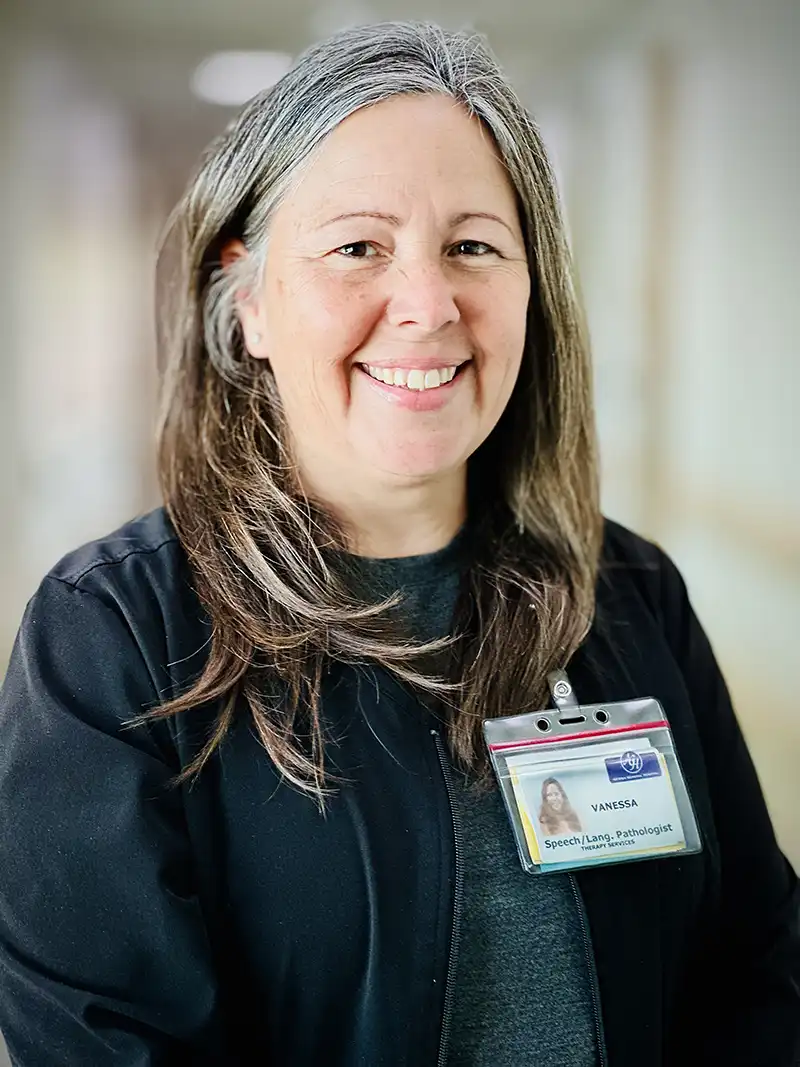
A FEES swallowing test is now available at Artesia General Hospital in both Artesia and Carlsbad. Vanessa J. Harvey, MS, CCC-SLP, our speech-language pathologist, performs the evaluation at our Rehabilitation Center in Artesia and at our multi-specialty clinic in Carlsbad. If you or someone you care for has trouble swallowing, this test shows exactly what happens in the throat, without radiation and without leaving Eddy County.
What is a FEES swallowing test?
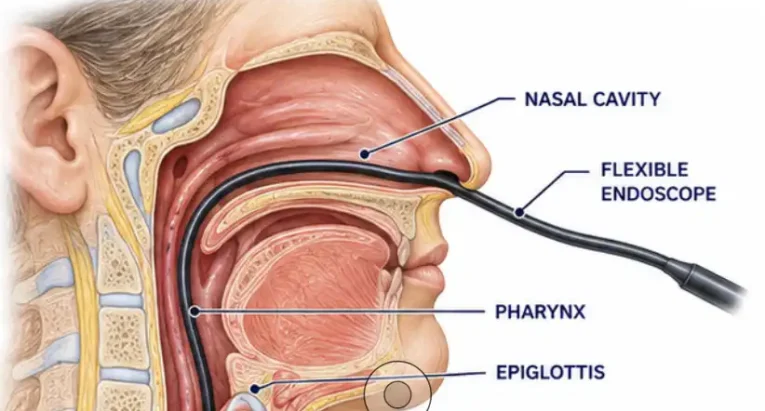
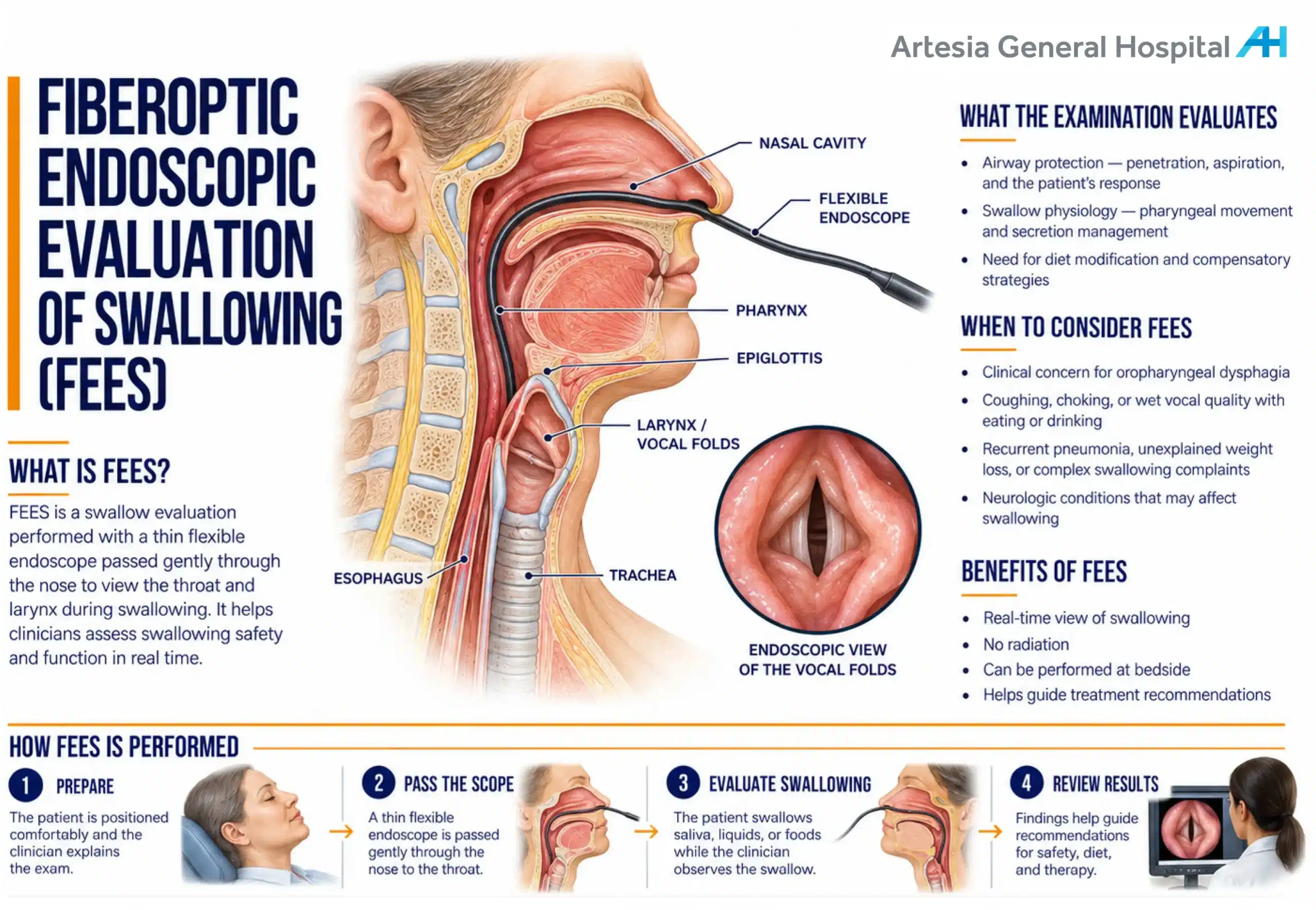
A FEES swallowing test is an evaluation in which a speech-language pathologist passes a thin, flexible camera through one nostril to watch your throat while you swallow. FEES stands for fiberoptic endoscopic evaluation of swallowing. It is one of two standard instrumental tests for dysphagia, the medical term for difficulty swallowing.
The scope sits just above the voice box. From there, Vanessa can see the back of the throat, the vocal folds, and the entrance to the airway in real color on a monitor. She watches whether any food or liquid slips toward the airway instead of the esophagus. That event is aspiration, and catching it is the main purpose of the test.
According to the American Speech-Language-Hearing Association, FEES can be completed in an outpatient clinic room or at the bedside, involves no radiation exposure, and can be used during therapy to check progress.
Who needs a swallowing evaluation?
You may need a swallowing evaluation if you cough or choke when you eat or drink, feel food sticking in your throat, notice a wet or gurgly voice after meals, or have had repeated chest infections. These signs suggest that food or liquid may be entering the airway, which can lead to aspiration pneumonia, dehydration, and weight loss.
Swallowing problems are common after a stroke. They also show up with Parkinson’s disease, multiple sclerosis, ALS, dementia, head and neck cancer treatment, and long hospital stays that involved a breathing tube. Some people simply notice that swallowing has become harder with age. We see all of these situations in our therapy departments across Artesia, Carlsbad, and the Pecos Valley.
A bedside swallow screen often comes first, but it cannot show what happens inside the throat. Silent aspiration, where liquid enters the airway with no cough at all, is invisible without an instrumental test.
“Many of my patients have been told to thicken their liquids or avoid certain foods based on a bedside screen alone. FEES lets me see the swallow instead of guessing at it. Sometimes that means fewer restrictions, not more, because we can prove what is actually safe.”
Vanessa J. Harvey, MS, CCC-SLP
What happens during the FEES test at AGH?
During a FEES test at AGH, you sit upright and awake while Vanessa passes a thin scope through your nose, then gives you small amounts of food and liquid to swallow while she watches on a monitor. Most evaluations take 15 to 20 minutes.
Here is how the visit unfolds:
- Check-in. Vanessa reviews your history and explains the equipment.
- Passing the scope. Vanessa may use a numbing spray or gel in the nostril. The scope is about the width of a piece of cooked spaghetti.
- A look at the throat at rest. Before any food, Vanessa watches you breathe, speak, and swallow saliva to see how well the throat protects the airway on its own.
- Food and liquid trials. You swallow thin liquid, thickened liquid, puree, and solid foods, usually tinted with food coloring so they show clearly on camera. She may also ask you to try a chin tuck, a head turn, or an effortful swallow. That shows whether a strategy makes a difference.
- Results, right away. The scope comes out and Vanessa talks through what she saw.
Johns Hopkins Medicine lists the risks of FEES as discomfort, gagging, a nosebleed, and, rarely, a brief spasm of the airway. Serious complications are uncommon, and Vanessa stops the test if you are not tolerating it.
How is FEES different from a modified barium swallow?
FEES uses a camera through the nose and real food; a modified barium swallow uses X-ray video while you swallow barium-coated food and liquid. A clinical review published in Otolaryngologic Clinics of North America describes both as gold-standard tests that agree well on aspiration, residue, and diet recommendations. They simply answer different questions.
- Radiation: FEES uses none. A modified barium swallow uses fluoroscopy, so the study stays short.
- What you can see: FEES shows the throat and voice box in real color, including saliva pooling and residue left behind after the swallow. The barium study shows the whole path from the mouth to the upper esophagus, including timing.
- What you eat: FEES uses your regular foods and drinks. The barium study uses barium-mixed textures.
- Length: FEES can run as long as needed, which helps when fatigue over a meal is the concern. Radiation dose limits the barium study.
- Where: FEES happens in a clinic room in Artesia or Carlsbad. The barium study requires a radiology suite and a radiologist.
A 2025 systematic review found FEES more accurate than videofluoroscopy at detecting pharyngeal residue, penetration, and aspiration, while the X-ray study remains the better choice when the esophagus itself is in question. Your referring provider and Vanessa will choose the test that fits your symptoms, and some patients benefit from both.
Ready to schedule? FEES requires a referral from your provider. Ask for a referral to AGH speech therapy, then call 575.736.8174 for Artesia or 575.885.2180 for Carlsbad to set up your evaluation.
What happens after the test, and why it matters that it is local?
After the test, Vanessa reviews the findings with you the same day and sends a written report to the provider who referred you. Because the test, the results, and the therapy that follows all happen at the same AGH site with the same clinician, nothing gets lost between appointments.
Instrumental swallow testing is rarely offered close to home in rural communities, and travel is exactly what a person with a swallowing problem, a recent stroke, or a caregiver on a tight schedule can least afford. As an example, a patient in Carlsbad recovering from a stroke can see their AGH primary care provider and get a referral. They then complete the FEES evaluation at 1410 N. 8th St. and start swallowing therapy with Vanessa in the same building, with progress notes staying inside one hospital system.
Her recommendations usually fall into a few categories:
- Texture changes. FEES shows which liquids and solids are safe, so restrictions are no broader than they need to be.
- Swallowing strategies. Positions and techniques such as a chin tuck or a head turn, tested on camera during the evaluation.
- Swallowing therapy. Exercises that strengthen and coordinate the throat muscles, delivered by Vanessa at the same location where you had the test.
- A repeat FEES. Because there is no radiation, the test can be repeated to measure progress and loosen restrictions as your swallow improves.
Vanessa expanded speech therapy services to Carlsbad in 2025 and treats speech, language, voice, cognitive-communication, and swallowing disorders in both cities. Our Artesia Rehabilitation Center remains the only clinic in Artesia offering outpatient speech therapy.
“Our rehabilitation team already treats swallowing disorders in Artesia and Carlsbad. Adding FEES gives Vanessa an objective picture of each patient’s swallow so the treatment plan is built on what she sees, not on what we assume. It is a natural next step for the program.”
Justin Hammer, PT, DPT, Director of Therapy Services
How do I get a FEES swallowing test at AGH?
You get a FEES swallowing test at AGH by asking your provider for a referral to AGH speech therapy, then calling the location that is convenient for you. The evaluation requires a referral.
- Ask for a referral. Any provider can refer you, including providers outside the AGH system.
- Call to schedule. Artesia: 575.736.8174 at the Rehabilitation Center in Artesia. Carlsbad: 575.885.2180 at the multi-specialty clinic, 1410 N. 8th St.
- Prepare for the visit. Wear clothes you do not mind spilling on, bring your medication list, and bring a family member if you would like a second set of ears.
Not sure whether you need this test? Start with your primary care provider at our Carlsbad clinics or in Artesia.
Frequently asked questions about FEES
Does the FEES test hurt?
Most people feel pressure or a brief sting, similar to getting water up the nose, for the few seconds it takes the scope to pass. A numbing spray is available.
How long does a FEES evaluation take?
The evaluation itself usually takes 15 to 20 minutes. Plan on about 45 minutes for the full visit.
Is there any radiation with FEES?
No. FEES uses a camera and a light, not X-rays, which is why it can be repeated safely to track progress.
Can I eat before the test?
Vanessa may ask you to avoid eating for a few hours beforehand so you are ready for the food and liquid trials. Vanessa’s office will give you specific instructions when you schedule.
Can I drive myself home afterward?
Yes. There is no sedation, and you can return to normal activities right away.
Do I need a referral for a FEES test at AGH?
Yes. Any physician, nurse practitioner, or physician assistant can refer you, including providers outside AGH.
Where is the test offered in Carlsbad?
At AGH’s multi-specialty clinic, 1410 N. 8th St., Carlsbad, NM 88220. Call 575.885.2180 to schedule.
Swallow safely, closer to home
Trouble swallowing is not something to push through. A FEES swallowing test gives you and your provider a clear picture and a plan, now available in Artesia and Carlsbad. Ask for a referral, then call 575.736.8174 in Artesia or 575.885.2180 in Carlsbad.
This article is for general information and is not a substitute for medical advice. Talk with your healthcare provider about your symptoms and whether a swallowing evaluation is right for you.
Medically reviewed by Vanessa J. Harvey, MS, CCC-SLP, Speech-Language Pathologist, Artesia General Hospital. Reviewed October 14, 2026.