


Diabetic Foot Care: Prevention & Treatment
Diabetic foot care at Artesia General Hospital focuses on preventing infections and limb loss caused by nerve damage and poor circulation. Specifically, Dr. Alieu Kanu, DPM, recommends daily foot inspections, wearing protective shoes, and seeking professional treatment for slow-healing wounds. Routine podiatric exams are essential to catch issues early. We serve Artesia, Carlsbad and Roswell. Call the AGH Podiatry Department at (575) 736-8282 to schedule.
Medically reviewed by Dr. Alieu Kanu, DPM — Nov 2, 2026
Diabetes changes how your feet feel, heal, and fight infection, which is why routine podiatric care matters more for people managing diabetes than for almost anyone else. Diagnosed diabetes affects an estimated 11.2% of New Mexico adults, higher than the 10.1% national rate, according to the New Mexico Department of Health, which makes this a genuinely local concern, not just a general health topic.
How does diabetes affect the feet?
Diabetes can damage nerves over time, a condition called peripheral neuropathy, which reduces sensation in the feet. That means an injury, blister, or pressure point can go unnoticed simply because it doesn’t hurt the way it normally would. Diabetes can also reduce circulation to the feet, which slows healing once an injury does occur. Together, reduced sensation and slower healing are why a minor-looking sore can progress to a serious wound faster than people expect.
What are the warning signs of diabetic foot problems?
- Numbness, tingling, or burning sensations in the feet
- Cuts, blisters, or sores that haven’t started healing within a couple of weeks
- Redness, warmth, or swelling, which can signal infection
- Changes in skin color or temperature in one foot compared to the other
- Toenail changes, including thickening, discoloration, or ingrown nails
- Dry, cracked skin, which creates entry points for infection

What does a diabetic foot exam involve?
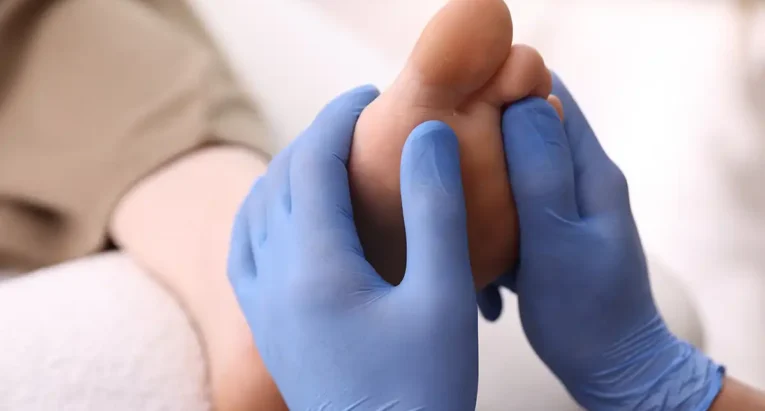
A diabetic foot exam typically checks sensation circulation, skin condition, and the shape and alignment of the foot. This is done with a simple monofilament test. It’s a quick, non-invasive check, and it’s often the first place early nerve damage or circulation issues show up, sometimes before a patient notices any symptoms at all.
How often should someone with diabetes see a podiatrist?
Most people managing diabetes benefit from at least one comprehensive foot exam a year. More frequent visits may be needed if nerve damage, circulation issues, or a history of foot ulcers is already present. Patients with an active wound or a foot deformity like Charcot foot typically need ongoing, closer follow-up.
What can I do at home to protect my feet?
The foundation of diabetic foot care isn’t actually in the feet: keeping your blood sugar in your target range slows the nerve damage and circulation problems that cause foot complications in the first place. AGH’s nutrition services and diabetes education program can help you build that foundation. From there, daily habits do the rest:
- Check your feet daily for cuts, blisters, redness, or swelling, using a mirror if needed to see the bottoms
- Wash your feet daily with lukewarm water, testing the temperature with your elbow first, since reduced sensation means you can burn your feet without feeling it; the same caution applies to heating pads, space heaters in close contact and hot water bottles, which are best avoided entirely
- Dry thoroughly, especially between the toes, and moisturize dry skin, but not between the toes, where excess moisture can encourage infection
- Choose socks that fit well without being tight, wick moisture, and have minimal seams; lighter colors make it easier to spot any drainage from a wound you didn’t feel
- Trim toenails straight across to help prevent ingrown toenails
- Wear well-fitting shoes and avoid walking barefoot, even at home
- Keep blood flowing: avoid crossing your legs for long stretches, and if you smoke, know that smoking can further restrict circulation to the feet
- Never try to treat a wound, callus, or ingrown toenail yourself; see a podiatrist instead
How does AGH approach diabetic foot care?
AGH’s podiatry program is led by Dr. Alieu Kanu, DPM, a fellowship-trained podiatric surgeon whose training centers on diabetic limb salvage, meaning catching and treating foot problems early enough to protect the limb rather than just managing symptoms. His work is closely coordinated with AGH’s wound care center for patients who need ongoing wound management. See the full range of conditions and treatments AGH podiatry offers.
When should I see a podiatrist?
Numbness or tingling and changes in the appearance of your feet or toenails are two of our 5 signs you should see a podiatrist, and both deserve extra attention if you have diabetes. Don’t wait for pain to prompt a visit; with diabetic nerve damage, pain is often the last symptom to show up, not the first.

How do I schedule an appointment?
Call the AGH Podiatry Department at (575) 736-8282 to schedule a visit.
Frequently Asked Questions
Why do people with diabetes need to see a podiatrist even without foot pain?
Diabetic nerve damage can reduce sensation before it causes noticeable pain, so a foot problem can develop without warning symptoms. Regular exams catch issues a patient might not otherwise notice.
Can diabetic foot problems be reversed?
Nerve damage itself generally can’t be reversed, but early treatment can prevent it from progressing and can prevent the complications, like ulcers and infections, that cause the most serious harm.
What’s the difference between a diabetic foot ulcer and a regular sore?
A diabetic foot ulcer is an open wound that develops partly because reduced sensation and circulation prevent normal healing and warning signs. It requires professional wound care rather than typical at-home treatment.
Should I see a podiatrist or my primary care doctor for diabetic foot care?
Primary care plays an important role in managing diabetes overall, but routine foot exams and any foot-specific problems are best handled by a podiatrist, who’s trained specifically in this area. Call the AGH Podiatry Department at (575) 736-8282 to schedule a visit.
This post is for general information and doesn’t replace a medical evaluation. Talk with Dr. Kanu or your care team about your specific symptoms and treatment options.