


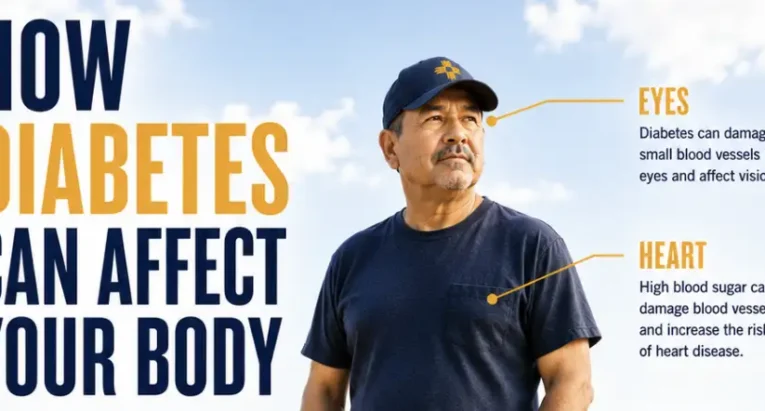
Diabetes is everywhere in New Mexico — and in Eddy County, it is one of the most pressing health challenges families face. Millions of Americans are managing it, millions more have prediabetes and don’t know it, and the consequences of poorly managed diabetes — kidney failure, vision loss, nerve damage, heart disease, amputation — are not inevitable. They are preventable.
But preventing those complications takes more than a prescription. It takes the right kind of care. And for too long, getting that level of care in southeastern New Mexico has meant driving hours to Albuquerque or Lubbock for a specialist appointment. That has changed. Diabetes care in Eddy County now includes access to a board-certified endocrinologist with a credential most people have never heard of — but absolutely should know about.
This guide covers what type 2 diabetes actually is, how prediabetes fits in, what warning signs to watch for, and what a genuinely comprehensive diabetes management plan looks like — including the local care options in Artesia and Carlsbad that make it possible to manage diabetes well without leaving the region.
Diabetes in New Mexico: The Numbers Behind the Challenge
Nationally, diabetes has reached significant scale. According to the American Diabetes Association’s 2026 statistics report, over 40 million Americans — roughly 12% of the population — are living with diabetes. Another 115 million adults have prediabetes. Of those with diabetes, an estimated 11 million are undiagnosed and don’t yet know it.
In New Mexico, the burden lands harder on certain communities. According to the New Mexico Department of Health, disparities by race and ethnicity are significant — and Hispanic adults in New Mexico face measurably higher rates of diagnosed diabetes than white adults. Nationally, the HHS Office of Minority Health reports that Hispanic/Latino adults were 13% more likely than the overall U.S. population to have diabetes in 2024, and 81% more likely to develop kidney failure caused by diabetes.
Eddy County reflects these statewide and national patterns. With a largely rural population, limited specialist access historically, and a significant proportion of residents who work in physically demanding outdoor industries — agriculture, oil and gas, construction — the conditions for diabetes risk are compounded by the conditions that make managing it harder.
The American Diabetes Association estimates total direct medical expenses for diagnosed diabetes in New Mexico at $1.49 billion. Diabetes was the sixth leading cause of death in the state. These are not abstract statistics. They represent Artesia families, Carlsbad families, Pecos Valley families — people who deserve access to the kind of care that can change those outcomes.
What Is Type 2 Diabetes — and How Is It Different from Type 1?
Type 2 diabetes is the most common form of the disease, accounting for the vast majority of all diagnoses. It develops when the body either doesn’t produce enough insulin or doesn’t use insulin effectively — a condition called insulin resistance. Over time, blood sugar levels rise and stay elevated, damaging blood vessels and nerves throughout the body.
Type 1 diabetes is a different condition entirely. It is an autoimmune disease in which the immune system attacks insulin-producing cells in the pancreas. People with type 1 diabetes require insulin to survive. Type 1 typically appears in childhood or early adulthood, though it can develop at any age.
Type 2 diabetes, by contrast, develops gradually and is strongly influenced by lifestyle factors — though genetics, age, and ethnicity also play a role. The good news is that type 2 diabetes is often preventable, and when caught early, its progression can be slowed or even reversed through diet, exercise, weight management, and medication when needed.
Common Symptoms of Type 2 Diabetes in Eddy County
Many people with type 2 diabetes have no symptoms at first. When symptoms do appear, they often include:
- Increased thirst and frequent urination — the kidneys work overtime to filter excess sugar
- Fatigue — cells aren’t getting the fuel they need
- Blurred vision
- Slow-healing cuts or sores
- Frequent infections, especially skin, gum, or bladder infections
- Tingling, numbness, or pain in the hands or feet (neuropathy)
- Darkened skin in the armpits or neck (acanthosis nigricans) — an early sign of insulin resistance
Because symptoms develop slowly and can be subtle, many people live with elevated blood sugar for years before being diagnosed. That’s one reason the CDC estimates that roughly 1 in 4 adults with diabetes don’t know they have it.
When Diabetes Becomes a Medical Emergency
Certain diabetes-related situations require immediate emergency care. Go to the ER right away if you or someone you know experiences:
- Extreme thirst, confusion, or difficulty staying awake (possible hyperglycemic crisis)
- Shakiness, sweating, rapid heartbeat, or sudden confusion that may indicate dangerously low blood sugar (hypoglycemia)
- Shortness of breath, fruity-smelling breath, nausea, or vomiting (possible diabetic ketoacidosis)
- Chest pain or pressure — people with diabetes face a significantly elevated risk of heart attack
The Emergency Department at Artesia General Hospital is equipped to manage diabetic emergencies.
Prediabetes: The Warning Stage Most People Miss
Before type 2 diabetes develops, most people pass through a stage called prediabetes. Blood sugar levels are higher than normal — but not yet high enough to be classified as diabetes. According to the NM Department of Health, most people with prediabetes don’t know they have it.
Prediabetes is not a guarantee of diabetes. With the right lifestyle changes, the progression to type 2 diabetes can be prevented or significantly delayed. That’s why early detection matters so much.
What Are the A1C Thresholds?
Blood sugar status is typically measured using the A1C test, which reflects average blood sugar levels over the past two to three months:
- Normal: A1C below 5.7%
- Prediabetes: A1C between 5.7% and 6.4%
- Diabetes: A1C of 6.5% or higher
Fasting blood glucose tests and oral glucose tolerance tests are also used for diagnosis. Your doctor or endocrinologist will determine which test is appropriate for your situation.
Risk Factors for Prediabetes and Type 2 Diabetes
You are at higher risk if you:
- Are 45 years of age or older
- Are overweight or have obesity
- Are physically inactive
- Have a parent or sibling with type 2 diabetes
- Had gestational diabetes during pregnancy
- Have polycystic ovary syndrome (PCOS)
- Have high blood pressure or high cholesterol
- Are Hispanic/Latino, Black, American Indian, Alaska Native, Pacific Islander, or Asian American
In Eddy County, several of these risk factors overlap for a large segment of the population — particularly elevated rates of obesity, physical inactivity, and the documented racial and ethnic disparities in diabetes prevalence. If you have one or more of these risk factors and haven’t had your blood sugar checked recently, talking to your primary care provider or an endocrinologist is worth the conversation.
Can Prediabetes Be Reversed?
Yes. Research consistently shows that lifestyle changes — particularly losing 5–7% of body weight through healthier eating and regular physical activity — can prevent or delay the progression from prediabetes to type 2 diabetes. Medication options are also available for some patients. The key is knowing your numbers early enough to act.
What Good Diabetes Care in Eddy County Actually Looks Like
Managing diabetes in Eddy County well goes well beyond a prescription and a six-month A1C check. Comprehensive diabetes care in Eddy County involves multiple layers — and the difference between adequate care and excellent care often comes down to the credentials of your care team.
The Role of an Endocrinologist in Diabetes Management
An endocrinologist is a physician who specializes in the endocrine system — the glands and hormones that regulate metabolism, blood sugar, thyroid function, and more. For people with diabetes, an endocrinologist brings a level of specialized knowledge that goes beyond what a primary care provider can offer.
This is especially important for patients with type 2 diabetes that is difficult to control, patients with type 1 diabetes, those who need help navigating insulin management, or anyone experiencing or wanting to prevent serious complications. While your primary care provider plays a critical role in ongoing diabetes monitoring, an endocrinologist offers the depth of specialty expertise that changes outcomes for complex or advancing cases.
What Is a CDCES — and Why Does It Matter?
This is the credential most patients have never heard of — but should. A CDCES, or Certified Diabetes Care and Education Specialist, is a healthcare professional who has completed extensive specialized training in diabetes prevention and management, passed a national certification exam, and demonstrated a specific level of hands-on experience in diabetes education.
The credential was formerly known as CDE (Certified Diabetes Educator), and was updated to CDCES in 2020 to better reflect the full scope of the role. It is administered by the Certification Board for Diabetes Care and Education, and today fewer than 20,000 healthcare professionals nationwide hold it.
What makes the CDCES particularly significant is what it means for patient care. Where a typical specialist visit may last 15–20 minutes, CDCES-certified care is designed around 30–60 minute education sessions that build the skills patients actually need to self-manage their condition. That includes:
- Understanding how food, exercise, stress, and illness affect blood sugar
- Learning to use and interpret continuous glucose monitors (CGMs) and other diabetes technology
- Developing personalized meal and activity plans
- Managing medications, including insulin, effectively
- Building confidence in daily self-management decisions
Most endocrinologists don’t hold the CDCES credential. It requires an additional, separate certification process above and beyond medical training. Having an endocrinologist who is also CDCES-certified means you get specialist-level diagnosis and treatment planning — and the education infrastructure to act on it. That combination is rare.
| Diabetes care in Artesia and Carlsbad — with the credentials to make a difference. Dr. Robert Ferraro is a board-certified endocrinologist and CDCES seeing patients at two locations in southeastern New Mexico. Artesia: 608 N. 13th St., Professional Building 3, Suite 600 | 575-736-8440. Carlsbad: 1410 N. 8th St., Suite B | 575-736-8490. Both locations offer Endocrinology and Diabetes Education. Se habla español. |
Diabetes Complications: What’s at Stake Without Proper Management
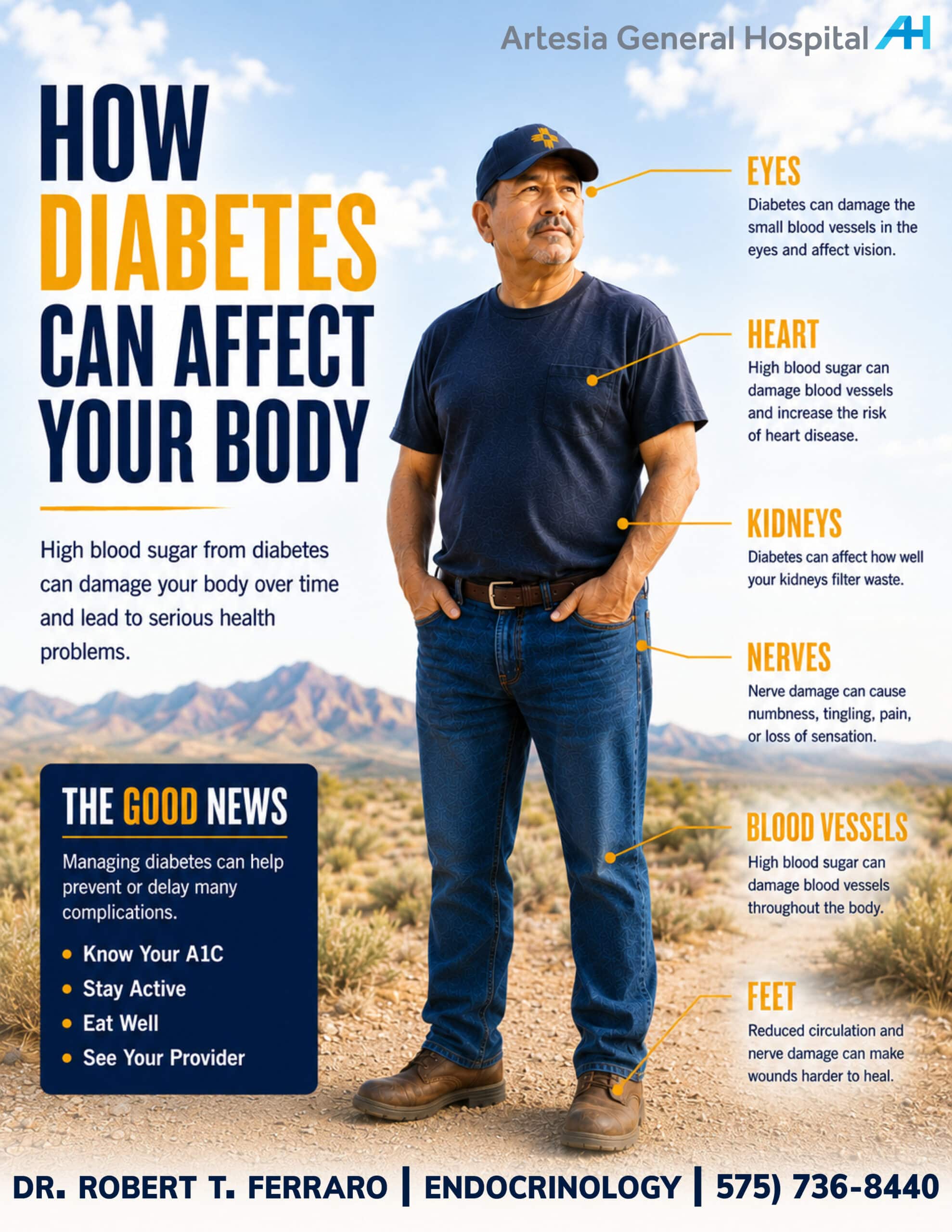
Unmanaged or poorly managed diabetes doesn’t stay in the pancreas. Over time, chronically elevated blood sugar damages blood vessels and nerves throughout the body, leading to a cascade of complications that affect nearly every organ system.
The most serious complications of poorly controlled diabetes include:
- Cardiovascular disease — Adults with diabetes are significantly more likely to develop heart disease or have a stroke. This is the leading cause of death among people with diabetes.
- Diabetic kidney disease (nephropathy) — Diabetes is the leading cause of kidney failure in the United States. Hispanic adults with diabetes are 81% more likely to develop kidney failure caused by diabetes than the general population.
- Diabetic neuropathy — Nerve damage, most often in the feet and legs, causing pain, tingling, numbness, or loss of sensation. Left untreated, neuropathy increases the risk of ulcers and infection.
- Diabetic retinopathy — Damage to blood vessels in the eye, which can lead to vision loss and blindness. Diabetes is the leading cause of new cases of blindness among adults aged 20–74.
- Diabetic foot complications — Poor circulation and neuropathy together create conditions where minor foot injuries can escalate into serious infections, sometimes requiring amputation.
- Increased infection risk — High blood sugar impairs the immune system, making people with diabetes more vulnerable to infections and slower to heal.
Every one of these complications is either preventable or significantly delayable with well-managed diabetes care. That’s not a marketing claim — it’s documented across decades of clinical research. The difference between getting specialty care and not getting it is measurable in quality of life, in limbs, and in years.
Diabetes Care in Eddy County: Dr. Robert Ferraro, MD, CDCES
Dr. Robert Ferraro is a board-certified endocrinologist and Certified Diabetes Care and Education Specialist (CDCES) serving patients across Artesia, Carlsbad, Roswell, and all of southeastern New Mexico through Artesia General Hospital’s endocrinology and diabetes care program. He is one of a small number of providers in the region who hold both credentials simultaneously.
Dr. Ferraro sees patients at two locations:
- Artesia: 608 N. 13th St., Professional Building 3, Suite 600, Artesia, NM 88210 | 575-736-8440
- Carlsbad: Carlsbad Multi-Specialty Clinic, 1410 N. 8th St., Suite B, Carlsbad, NM 88220 | 575-736-8490
Both locations offer endocrinology care and diabetes education. For patients in Carlsbad, Loving, Malaga, Loco Hills, and the surrounding Pecos Valley area, this means specialist-level diabetes care without the trip to Lubbock or Albuquerque.
Dr. Ferraro’s care covers the full spectrum of diabetes management: type 1 and type 2 diabetes, prediabetes, gestational diabetes, insulin management, diabetes technology including CGMs, and diabetes-related complications. He also manages thyroid disorders, adrenal conditions, osteoporosis, and other hormone-related conditions — common in patients whose diabetes intersects with broader metabolic health concerns.
Se habla español. Dr. Ferraro sees patients in both English and Spanish — an important resource for the bilingual communities of Eddy County and the broader Pecos Valley.
Frequently Asked Questions About Diabetes Care in Eddy County
What is the difference between type 1 and type 2 diabetes?
Type 1 diabetes is an autoimmune condition in which the immune system destroys insulin-producing cells in the pancreas. People with type 1 require insulin to survive. Type 2 diabetes develops when the body stops using insulin effectively or stops producing enough of it. Type 2 is far more common, accounts for the majority of all diabetes cases, and is strongly linked to lifestyle factors — though genetics and ethnicity also play a role. Both conditions require careful management, ideally with the guidance of an endocrinologist.
What is prediabetes, and can it be reversed?
Prediabetes means your blood sugar is higher than normal but not yet in the diabetic range. An A1C between 5.7% and 6.4% is considered prediabetic. With lifestyle changes — including modest weight loss, increased physical activity, and dietary improvements — prediabetes can often be reversed, and the progression to type 2 diabetes can be prevented or significantly delayed. The key is finding it early, which requires regular screening.
When should I see an endocrinologist instead of my primary care provider for diabetes?
Your primary care provider is an important partner in diabetes management. But an endocrinologist is typically recommended when: your A1C remains difficult to control despite medication; you need insulin or are new to insulin management; you have type 1 diabetes; you’re experiencing complications like neuropathy, kidney changes, or vision problems; or you want a more specialized approach to managing your condition. An endocrinologist’s deeper expertise in hormonal and metabolic systems often leads to more precise treatment adjustments and better long-term outcomes.
What is a CDCES, and why does it matter for my diabetes care?
A CDCES (Certified Diabetes Care and Education Specialist) is a healthcare professional who has completed specialized diabetes education training, accumulated at least 1,000 hours of diabetes education practice, and passed a national certification exam. The credential — formerly known as CDE — is administered by the Certification Board for Diabetes Care and Education. Having a CDCES on your care team means you receive not just a diagnosis and a prescription, but the practical education and coaching to manage your diabetes day-to-day. That includes how to interpret your blood sugar readings, how to adjust your lifestyle, how to use diabetes technology effectively, and how to prevent complications.
Does Artesia General Hospital have a diabetes specialist?
Yes. Dr. Robert Ferraro, MD, CDCES, is a board-certified endocrinologist and Certified Diabetes Care and Education Specialist seeing patients in both Artesia and Carlsbad. He manages type 1 and type 2 diabetes, prediabetes, insulin therapy, and diabetes-related complications. To make an appointment at the Artesia office, call 575-736-8440. For Carlsbad, call 575-736-8490.
Is there a diabetes doctor near Carlsbad, NM?
Yes. Dr. Ferraro sees patients at the Carlsbad Multi-Specialty Clinic at 1410 N. 8th St., Suite B, Carlsbad, NM 88220. Both Artesia and Carlsbad locations offer endocrinology and diabetes education services. Call 575-736-8490 for Carlsbad appointments.
¿Hay un endocrinólogo que hable español en Artesia o Carlsbad?
Sí. El Dr. Robert Ferraro habla español y atiende pacientes en inglés y español en ambas ubicaciones: Artesia (575-736-8440) y Carlsbad (575-736-8490). Ambas clínicas ofrecen atención de endocrinología y educación sobre la diabetes.
| Ready to take control of your diabetes care in Eddy County? Dr. Robert Ferraro, MD, CDCES is accepting new patients at two convenient locations. Artesia: 608 N. 13th St., Suite 600 | 575-736-8440. Carlsbad: 1410 N. 8th St., Suite B | 575-736-8490. Visit artesiageneral.com/service/endocrinology/ to learn more or request an appointment. Serving Artesia, Carlsbad, Roswell, and all of southeastern New Mexico. Se habla español. |
Medical Disclaimer
This content is provided for general informational purposes only and does not constitute medical advice, diagnosis, or treatment. Always seek the guidance of a qualified healthcare provider with questions about your medical condition. If you believe you are experiencing a medical emergency, call 911 or go to the nearest emergency room immediately.
Medically Reviewed by Dr. Robert T. Ferraro, MD, Board-Certified Endocrinologist & Certified Diabetes Care and Education Specialist (CBDCE)